
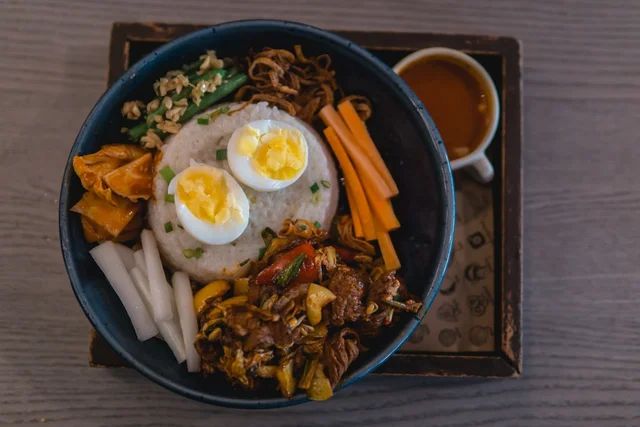
What are the 5 core components of Bibimbap?
Bibimbap is one of the most beloved dishes on the Korean table, consisting of colorful seasoned vegetables (namul) and meat toppings served over white rice. The ingredients, representing the five traditional colors (obangsaek), provide not only visual appeal but also balanced nutrition. The key to this dish is highlighting the texture of each ingredient and ensuring they harmonize naturally with the gochujang sauce.
Selection criteria for main ingredients
- Bean sprouts or mung bean sprouts: It is important to blanch them briefly to maintain a crisp texture.
- Bracken (gosari) and bellflower root (doraji): Sauté in perilla oil to bring out their unique aroma and deep flavor.
- Beef: Stir-frying with bulgogi seasoning significantly enhances the overall savory taste.
- Egg: Serve with a soft-boiled yolk to add a rich, nutty flavor when mixed.
Precautions for ingredient preparation
All ingredients should be julienned to a consistent size so that they provide a harmonious mouthfeel when mixed with rice. Ensure namul is sufficiently drained so the Bibimbap does not become soggy and maintains a clean taste. In particular, you can adjust the gochujang by adding a little sesame oil or sugar to suit your preference for a richer flavor.
Gochujang sauce recipe to elevate Bibimbap flavor
the most important factor in determining the taste of Bibimbap is undoubtedly the gochujang-based sauce. Adding your own secret ingredients rather than using plain gochujang can result in a much more sophisticated flavor. The key to this preparation is reducing the chalkiness of the gochujang while bringing out a deep, savory umami taste.
Tips for mixing the sauce
- Basic base: Mix 2 tablespoons of gochujang, 1 tablespoon of sesame oil, and 0.5 tablespoons of oligosaccharide.
- Adding umami: A small amount of minced garlic or plum extract adds a refreshing zest.
- Adjusting consistency: If it is too thick, add a spoonful of broth or water to make it smooth.
Precautions by cooking step
It is best to prepare the sauce in advance and let it age before adding it to the rice, as this allows the flavors to meld better. Also, make sure the rice is slightly cooled rather than piping hot when adding the namul so that the vegetables do not wilt, allowing you to enjoy their crisp texture until the very end. Adding sesame oil at the very last step is recommended, as it maximizes the nutty aroma.
3 ways to enjoy Bibimbap even more deliciously
Bibimbap is more than just mixing ingredients; its charm changes depending on how you eat it. The serving bowl and side dishes can greatly impact the dining experience. Here are some recommended methods that reflect traditional Korean food culture.
Recommended dining styles
- Dolsot (Hot Stone Pot) Bibimbap: Serving in a hot stone pot keeps the dish warm until the end, and the crispy scorched rice at the bottom is a special treat.
- Side dishes for Bibimbap: Pairing it with mild white kimchi (baek-kimchi) or refreshing water kimchi (nabak-kimchi) helps neutralize the spicy kick of the Bibimbap.
- Healthy vegetarian option: Replace meat with plenty of sautéed mushrooms to create a light and healthy vegetarian Bibimbap.
Checklist
- Rice condition: Slightly firm, dry-cooked rice is better for mixing than freshly steamed, moist rice.
- Temperature maintenance: If using a stone pot, the handle will be extremely hot, so always wear safety gloves.
- Color harmony: Consider the color contrast—red gochujang, green namul, and yellow egg—to create a visually appealing dish.